Skip to content

Posts tagged ‘Television’

Modern Family – ‘Little Bo Bleep’

Modern Family is a comedy sitcom that premiered on ABC in September of 2009. This mockumentary style series was created to appeal to the everyday American family by featuring three different families that can be characterized by modern-day circumstances. However, this past January, the show found itself in the midst of a controversy. Episode 13 of the show’s third season, titled ‘Little Bo Bleep’ was centered on one of the young daughters, Lily, learning and repeating the F-word.

Although the word was beeped out and her mouth was blurred each time she said the curse word, the episode drew negative attention from advocacy groups such as the Parents Television Council, which claimed that the show was exhibiting “poor taste” and a mild form of child abuse. The actors responded by saying that it was no way child abuse because the child actress actually said the word “fudge” during filming.

Reading these articles and watching this episode of Modern Family, I cannot help but relate it back to our class discussion of Shirley Temple. Many American viewers during the 1930’s were concerned that such a young girl such as Shirley Temple was being exposed to the actions and behaviors of adult women. The ‘War Babies’

Lily and her fathers (Cameron and Mitchell) right after she says the F-Word during a wedding.

video clip that we watched during class showed very young children portraying the lives of young adults. While watching Shirley Temple in this video, I realized I had conflicting emotions about what I was seeing. A part of me was disturbed by the kissing and sexual innuendoes being expressed by the kids, but the other part of me was highly amused to see these children behaving like adults.

I experienced this same phenomenon while watching the ‘Little Bo Bleep’ episode of Modern Family. I thought it was absolutely hysterical to watch Lily say the F-word out loud, especially when she does it in the middle of a wedding. However, it does become uncomfortable when you think about such a young child actress being trained to say the curse word. In the end, I think it is absolutely ridiculous for the show to be criticized for this particular episode. Modern Family prides itself on presenting an accurate portrayal of all aspects of family life, and this situation is something many families can say they have experienced.In response to the child abuse accusations, if the young girl was indeed saying the word “fudge”, the show’s producers were in no way abusing the actress.

Reality World for Comics

There’s a new reality show airing on February 11th.  Comic Book Men will take viewers into the“sacred geek temple” of a retail comic book store. Kevin Smith, comic book writer and film producer, is the brains behind the show. The storyline revolves around the four guys who work in the store and who also model for Smith’s comic book characters.

The show features an all-male cast, which has received criticism because of the lack of females.  Smith acknowledges that both women and African-Americans are both under-represented in comics and sees this as something that needs to change.  He also points out that non-geeks can feel alienated when they enter a retail comic store.  He hopes his new show will make mainstream America more comfortable with the comic industry.

youtube, Mingchen, Jan. 1, 2012

According to a recent survey by DC Comics, males make up 93% of its readers. Blogger Henry Hanks, a contributor on CNN Geek Out!,  confirms that there is an entire culture of geeks out there who thrive on the characters and stories contained in comics. We saw an example of this in the video we watched in class about the geek collector.

Todays’ comic books contain the same stereotypes that readers encounters in the 1940s – females with big boobs, and males with huge muscles. The storylines haven’t changed either – men in capes are still rescuing helpless women. In the book, The Ten-Cent Plague, David Hadju, takes the reader through the history of comics and helps decipher the intense attraction many have towards these books.

The comic industry as a whole is suffering economically and the hope for this show is that it will expose non-geeks to the art of comic collecting and increase readership.

Toddlers & Tiaras

Someone showed me this video this weekend and it kept coming to mind during today’s lecture.

It’s ridiculous,

But still hilarious at the same time.

Enjoy!

Why Can’t I Like the Pink One?

When I was a kindergartener, there was nothing cooler than the Mighty Morphin Power Rangers TV show. The Power Rangers, which debuted on Fox in 1993, were a gang of teenagers who defended planet Earth from invading aliens by using sweet martial arts moves and teamwork.

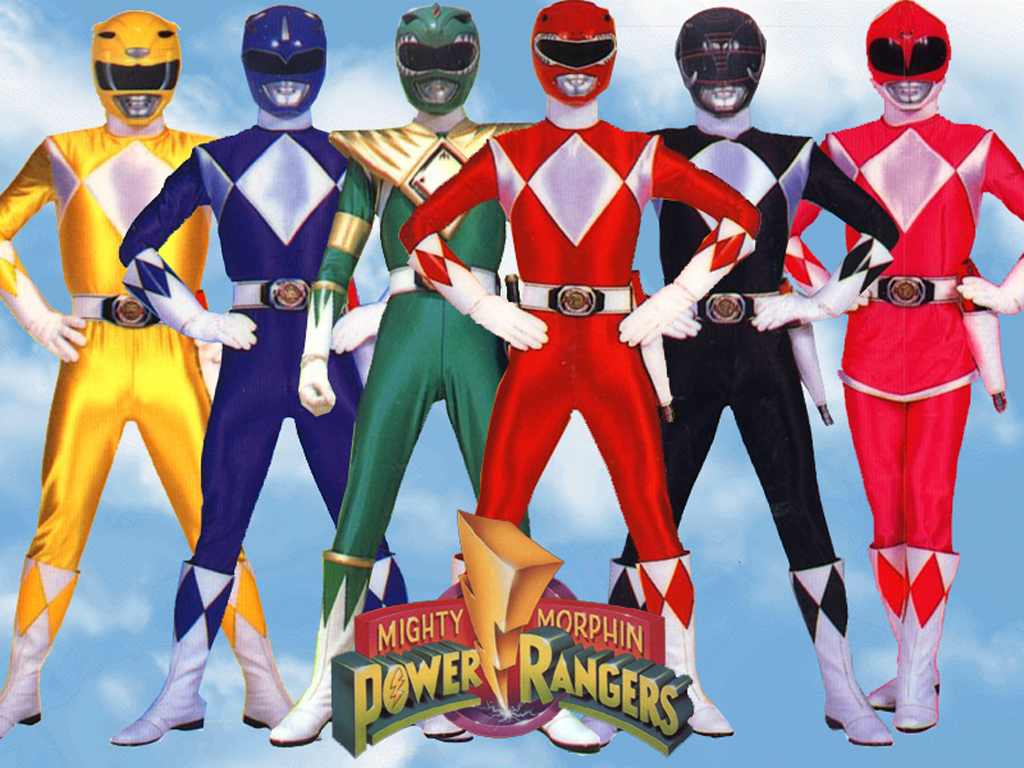
The six Power Rangers were defined their colors: there was Jason the red one, Kimberly who wore pink, Zack in black, Trini would be in yellow, Billy donned blue, and Tommy was the green Ranger. By displaying the Power Rangers in such a manor, the show’s producers easily enabled children to pick their favorite character based on their favorite color.

The 6 Original Mighty Morphin Power Rangers

But there was a catch. If you were a boy in my kindergarten class, you could not like the Pink or the Yellow Ranger. Those two girls characters were reserved for girls to like only, although I do recall girls being allowed to like the boy Power Rangers without penalty.

This gender separation of selection of favorite character reminds me of Elizabeth Segel’s article, “‘As the Twig is Bent…’ Gender and Childhood Reading.” In the article, Segel describes children’s literature and the division of stories between boys’ and girls’ books, and also the readiness of girls to read about male characters and the unwillingness of boys to read about females (Segel, 73).

Laura McGrath also noticed the separation of the boy and girl Power Rangers, especially in the opening credits that would air before every episode. She describes, on her blog, how the male characters would be portrayed doing physical actions such as karate kicks or wrestling aliens, while the female Rangers were seen stretching and doing gymnastics.

I do not believe that the Power Rangers were sexist or gender separatists, rather it was the children themselves who created the separation. Every child was free to chose whichever Ranger they wanted to be their favorite, but it was the fear of being ridiculed in the classroom that restricted the choices.

Power Rangers for Everyone

Power Rangers in the 1990's

One of my favorite T.V. shows throughout my childhood was the Power Rangers. The series started in 1993 and shortly after become a nationwide phenomenon with many different toys and costumes for children. It started as a series in Japan and Americans then adapted in in 1993 to become a show on the Fox network. It has many different series that have played throughout the years but they all revolve around the same concept. Power Rangers is a superhero show that consists of a few young normal people who are trained to become super heros and fight villains. They transform and fight as a team wearing suits and helmets. For 3 years in a row I dressed as the pink Power Ranger for halloween and many other kids I know would dress up as Power Rangers and we would play fight at the playground. The costumes range in price from around $20-30.

The Power Rangers became a huge pop culture icon throughout the 1990’s. In class discussion, we tried to define pop culture and what can be classified as pop culture. I think pop culture can be different depending upon where you live and the society you are in, but is something that a large majority of people can identify with. The creators of Power Rangers were very smart when trying to decide how to target a broad range of children. By creating characters that appeal to both girls and boys the target market can double. If you look at a lot of toys or television shows geared for children they typically tend to appeal towards one gender or the other. Power Rangers used color and characters to appeal to both. Power Rangers was a big part of my childhood and created unity on the playground for boys and girls alike to wear their different costumes to school and fight the villains of the playground.


The Big Comfy Couch

Ever since I was a child, one of my favorite shows was The Big Comfy Couch. I distinctly remember I loved the show so much that my parents even bought me the doll Molly, the sidekick, which was priced around $19.99. Every day I would sit on my couch and pretend that I was sitting on “The Big Comfy Couch” with Molly sitting right next to me. The Big Comfy Couch was aired from 1992 to 2006 and was a Canadian children’s television series. Cheryl Wagner created this television series about Loonette the Clown and her doll Molly, who solve their everyday problems on this big comfy couch. Each episode focused on a different aspect of movement that children were encouraged to partake in, such as stretching, jumping, or dancing.

The Big Comfy Couch on Treehouse TV

In Gary Cross’s article entitled, “Modern Childhood, Modern Toys” he discussed how gender had a tremendous affect on the toys presented to either young boys or young girls during that time. He says, “Girls’ playthings were almost exclusively dolls and their accessories” (49). This was presented in the show The Big Comfy Couch by the doll Molly which appealed to young girls. It showed that a doll can be your best friend, which was represented by the relationship between Loonette, the clown, and Molly.

Through the continued watching the television show every day, seeing the Big Comfy Couch started to become a routine. Whenever the afternoon rolled over, my mother would always know to turn on the television for me. Just as in Gary Cross’s article, he says, “Toys did not cease serving the needs and imagination of adults, but they began meeting adults’ ideas about the needs of children” (47). Therefore, my mother knew what had then interested me, and through modern technology it became a source for parents, like my own, to entertain their children.