Skip to content

Oscar Nominated Films As Reenacted By Children

Tonight is the 84th Academy Awards ceremony, and it seems appropriate to see how children are used to comment upon the Oscar nominees. As found on Jest.com, children are used to reenact some of the Oscar nominated films from 2011.

Part one of the child reenactments of 2011 Oscar nominated films from Jest.com:

Part two of the child reenactments of 2011 Oscar nominated films from Jest.com:

The child actors adopt adult roles from the nominated films in a way that is supposed to be humorous to the adult viewer. While the child actors are likely aware that their cute and funny behaviors evoke a positive reaction from an adult, they are unlikely aware of the connotations and meanings of the things that they are saying. This tactic is similar to the one seen in Baby Burlesks, as was discussed in class. (The child reenactment of Midnight in Paris is strangely similar to the Baby Burlesks clips that we watched in class.) Adult viewers are deriving humor and pleasure from something that is being inappropriately displayed by a child in Baby Burlesks and in the child reenactments of Oscar nominees. The innocent child portraying something provocative and unsuitable is prevalent in both past and present culture. Why adults continue to find this type of entertainment amusing is curious… and a bit twisted.

Although it is not readily apparent that these children are experiencing any emotional labor, it should not be assumed that they are not. These children are being asked and prompted to act like someone whom they are not, and this could have the potential of inducing emotional labor.

In the reenactment of The Help, the girls reference racism in a way that is very childish. The first girl exclaims, “I solved racism!” and later says “I’ll feel better about being a white person and you’ll lose your job?” while the other two girls in the reenactment eagerly nod their heads. The first comment made portrays the innocence of childhood, and the second comment coupled with its response from the other two girls is something that is aimed at the adult viewer. These children probably do not realize that they are being used to humorously depict a controversial race issue from American history.

The children are also used to poke fun at the actual award ceremony itself. In the reenactment of Extremely Loud and Incredibly Close, one of the boys says, “If I find out where this key goes, maybe I’ll understand why this movie was nominated for an Oscar.” This statement reiterates the notion that these child actors do not really understand the movies or the content that they are acting out. Additionally, the comment and the writings on the boys’ hands satirize the type of movie that would be nominated for an Oscar. This is something an adult, not a child, would find comical and witty.

In the reenactment of The Descendants in part two of the video clips, the children again assume very adult roles and remain entirely unaware of the unsuitability of their placement. The children are apologizing for who they have slept with. This in particular comes off as fairly disturbing. This clip differs from Baby Burlesks because the sexual references are explicit; the explicitness of language and connotation taints the innocent façade of the child actor.

The childish voices attached to the small bodies trying filling adult ones, penciled on mustaches, hidden smirks, lack of intonation, scribbled drawings, and outbursts of “Puppy!” and “Dinosaur!” are some of the surface features that make these clips entertaining. Perhaps because these surface features enchant and engross adult viewers, and very little thought is given to the improper placement of the child into an adult scene, is why this type of entertainment has successfully lasted throughout the years.


Is Reality Enough?

The Brutality of Virtual Reality

In an article from the New York Times titled, “Go Directly, Digitally to Jail? Classic Toys Learn New Clicks” the topic of how children’s toys are becoming more integrated with technology is discussed. Specifically, children no longer are simply just playing with their physical toys but are now interacting toys with mobile devices.  For Monopoly there are now iPhone apps available that count everyones money (I guess it stops people from stealing from the bank!). In Barbie, there is a lens in her back and the captured camera image appears on the front of Barbie’s T-shirt. The topic that most caught my attention though, was an app for Apple products that shows “live video of the environment overlaid with graphics”. An example of this would be a child pretending to shoot his TV and the TV blows up on the Apple product display screen. Could this new app possibly be a step towards virtual reality becoming the preferred reality for the younger generation as in Ray Bradbury’s “The Veldt”? In “The Veldt”, there is a nursery room in which “Whatever you thought would appear” (pg. 164). I interpreted this to be symbolic for the increasing stake children have in the consumer landscape (preteen children bought $30 billion worth of goods in 2002. pg. 176) and companies producing products rapidly to satisfy there wants. If children start to prefer virtual reality, then virtual reality will be produced. The parents in “The Veldt” become scared when the virtual environment has become “a little to real” (pg. 162), and I sense that actual parents will too, become scared. I would not blame them either because as human-beings we have a socially internal need to be, not only with each other but, with nature. Bradbury refers to this bond as “living” (pg. 169). I cannot further articulate what the social bond with other living things is so I will borrow an excerpt from Ralph Waldo Emerson’s “Nature”, “In the woods, we return to reason and faith. There I feel that nothing can befall me in life, — no disgrace, no calamity (leaving me my eyes), which nature cannot repair. Standing on the bare ground, — my head bathed by the blithe air and uplifted into infinite space, — all mean egotism vanishes. I become a transparent eyeball; I am nothing; I see all; the currents of the Universal Being circulate through me; I am part and parcel of God. The name of the nearest friend sounds then foreign and accidental: to be brothers, to be acquaintences, master or servant, is then a trifle and a disturbance. I am the lover of uncontained and immortal beauty. In the wilderness, I find something more dear and connate than in streets or villages. In the tranquil landscape, and especially in the distant line of the horizon, man beholds somewhat as beautiful as his own nature.” 

However, hypothetically, if virtual reality does advance so much that it is impossible to decipher it from actual reality, who decides this is a bad thing? Who decides that the feeling of reality is not as good as reality itself?

Video of “Bad Robot Interactive App” that lets you stream “live video of the environment overlaid with graphics”. From http://www.youtube.com/watch?v=sjra0Fw_Anw

Sophia Grace and Rosie Young Stars

Sophia Grace and Rosie in the Grammy Awards 2012

Huffpost Celebrity describes the recent experience of two British girls, 8 year old Sophia Grace Brownlee and 5 year old Rosie McClelland, in the Ellen DeGeneres show during their Grammy Awards 2012 red carpet debut. The young duo was invited to attend Ellen’s popular TV show to display their adventures as they interviewed celebrities at the 2012 Grammy’s.

The British duo started their public display with their YouTube video singing Nicki Minaj’s top chart song Super Bass. It was there Ellen’s team discovered the young sensation and invited them to Ellen’s show. After an appearance on Ellen’s show, Ellen was extremely impressed she sent them as her correspondents to the 2011 American Music Awards. Now, after obtaining more exposure through Ellen at the 2012 Grammy Awards the girls state they are becoming pros at red carpet events and interviewing.

These young girls are being exposed to the adult media culture at a very fast rate. Critics wonder how the events they attend and the content of lyrics they sing may influence the girls childhood. As Lynn Spigel wrote “Television’s immediate availability in the home threatened to abolish childhood by giving children equal access to the ideas and values circulated in the adult culture” (Pg 150). In the Ellen show the girls stated they learned the lyrics to Nicki Minaj’s Super Bass song in under a week , yet do not know what the song is really about. During the Super Bass performance Sophia Grace is caught singing “he cold, he dope, he might sell coke” and “He just gotta give me that look, when he give me that look then the panties comin’ off, off”. Conflict arises questioning if the girls performance displays the parents lack of character in raising their daughters or supports an impressive talent which Sophia Grace and Rosie as potential superstars in the making. Whatever the conclusion is, we can all agree the young duo has an amazing career in the entertainment industry and we will be seeing a lot of more of them.

Sophia Grace and Rosie Performing “Moment 4 Life”

A recent dispatch from the continuum of moral panic

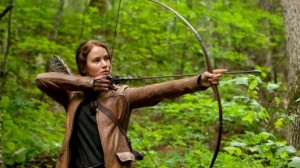
One of the latest “it” books for Young Adults to receive moral panic from parents is the dystopian sci-fi trilogy The Hunger Games.  In the novels, children must fight for their respective geographical regions in violent, homicidal contests.  The books have become very popular, leading to a soon-to-be-released film.  But since this novel is aimed at YA readers, its depiction of children waging war upon each other – even killing one another – has ruffled the feathers of some parents.  In this article dating from October, 2010, a New Hampshire parent of an 11 year old daughter has called for her local school district to remove the book from its reading schedule.  The mother claims that her 11 year old had nightmares after reading some of the novel.  She also claims the violence depicted could numb some children.

These concerns fit into class discussions on moral panic.  Such worries over violence are echoed in our studies on comic books.  Worries over a detrimental numbing effect coincide with our studies on parental fears of television.  In both cases, the New Hampshire parent prefigures negative ramifications on her child – and other children – due to exposure to what she deems questionable subject matter involving violence.

The article goes on, however, to voice others’ opinions about the propriety of the novel and the demands one parent can have over a group of children.  A censorship expert cautions against this tyranny of the minority in the article.  She claims that these issues are very delicate, but ultimately it isn’t right for one parent to hold sway over a curriculum involving 20 or more children.  This underlines an important aspect of class discussions on moral panic.  Who exactly is right?  The parent (or parents) objecting to material or those who refuse to censor creative expression?  At the time of the article, neither side is victorious.  A committee had been formed to discuss the book and make a decision.  What they decide will effect whether the book is banned, or if it will continue to be read.


On an interesting side note, the article mentions that the book is being read as an alternative for children who choose not to take a foreign language class.  In my opinion, that should be what the outrage is about.  How a pop culture, YA book can stand in for exposure to another culture’s language is beyond me.  It seems silly to get into an uproar over “appropriate content,” but not to be concerned with a lack of interest children have (or are motivated to have) in learning a new language.

Ren and Stimpy

One of the cartoons I used to watch in my childhood, “Ren and Stimpy,” in particular relates to the concepts of anxious parents and concerns over children’s television that we discussed in relation to the Chudacoff reading, “The Commercialization and Co-optation of Children’s Play.” “Ren and Stimpy” was created in 1991 by a Canadian animator named John Kricfalusi for the children’s channel Nickelodeon. The show focused on the adventures of a chihuahua named Ren and his dim-witted cat friend Stimpy, and the various gross and outrageous situations they would get themselves in to. This was one of the major concerns my parents had over me watching this program. In the article Cartoons Aren’t Real! Ren and Stimpy in Review, by Animation World Magazine, the author states that, “The Ren and Stimpy Show featured filth, illness, disease and mutilation to an unprecedented degree, making these horrors an integral part of the show.” My parents were very disturbed by the sorts of gross-out comedy and toilet humour that the show relied on for the majority of its punch lines.  Whether it was scenes of outrageous violence and mutilation, or bodily fluids spraying all over the place, “Ren and Stimpy” was always good for a laugh, and contained a variety of great low-brow humor. My parents worried, however, that by allowing me to view things such as this at the young age where I was watching Nickelodeon, my growth would be stunted, and I would be exposed to things I didn’t yet understand. This related to the fears we discussed in relation to the Chudacoff reading. Parents were worried that if children saw inappropriate or adult content on the television, their emotional development would be stunted, and they would be prematurely aged by things they were too young to comprehend. I can’t say how much of this was true for me, but “Ren and Stimpy” was a staple in my television viewing as a child, and was one of the most ground-breaking shows of its time for its willingness to go to extreme lengths in depictions of the gross and disgusting.

A scene of gross-out humor common in Ren and Stimpy to serve as an example.


Children and TV

calorielab.com

In the article Children and Watching TV, The American Academy of Child & Adolescent Psychiatry argues the effects that television has on children and the family structure. The article argues that children spend a majority of their time watching TV; this can be detrimental to the child’s development. Though TV can be fun and keep kids occupied, it can have adverse effects. Watching a lot of TV can harm children’s school work, family relationships, and social development. They can learn bad things from TV as well. The article states that children have a problem with identifying fantasy from reality. TV has a lot of violent and sexually explicit material that may be too much for children. The writers believe that parents should take a more active role in what their kids watch. Parents should do this by sitting down and watching TV with their kids. They could  limit the amount of TV and censor the shows kids watch.  The American Academy of Child & Adolescent Psychiatry believes the amount of TV should be limited and parents should play a more active role in their children’s lives. This article is coming from Doctors perspective geared towards parents. These psychiatrists are trying to tell these parents what they should be doing to help with child development. In Ray Bradbury’s “The Veldt”, it was about a house that did everything for the family inside of it. After realizing their kids were reading stories of Africa and created a “veldt”, the parents became concerned about the house and it’s effects on their children. The mother felt as if she was no longer a mother figure to her kids since the house did everything a mother should do; the father had these same feelings as well. The parents were no longer playing an active role in their kids lives and the house had taken their responsibility. The house and the TV are the same in this argument. The house and the TV are being used as “babysitter” for kids. You can basically throw your child in front of a TV and they will be fine. It’s teaching them, it’s entertaining them; it takes responsibility away from parents. The house had the same effect; the parents no longer felt like they were being parents because the house took care of the kids. I do not believe that the effects of TV on children have changed very much from years ago. There is more media for children to view now than before, but; media still has it’s same effect on children whether new or old. TV is still a heavily debated  one for kids. It still has it’s same influences on children and parents still react the same to it. TV is always going to be the same and you can only limit a child for so long.

Television and Children: Health Concerns

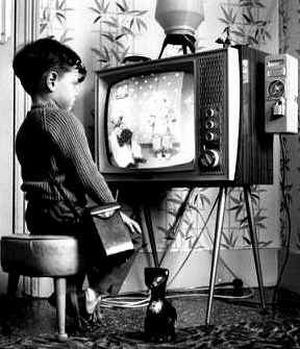
Photo from almightydad.com, a parenting website.

An article from Time magazine claims that watching television is sedentary behavior, which leads to obesity and bad health. The author of the article, Alice Park, says that researchers in the U.S. and in Spain studied 111 children 3-8 years old and concluded that of all the kinds of inactivity they studied, tv-watching was worst. The study showed a higher blood pressure in kids who watched a lot of tv, whether the kid was overweight or healthy. Other activities such as computer usage did not show the same blood pressure issues. The researchers tracked the childrens’ inactivity over one week using accelerometers. They found that kids who watched 90 – 330 minutes of tv per day had systolic and diastolic blood-pressure readings that were much higher than children who watched less than half an hour per day. The author quotes Dr. David Ludwig of Children’s Hospital Boston, who says, “These results show that TV-viewing really is the worst of all possible sedentary activities”. She also cites the American Academy of Pedriatrics, which recommends that children under 2 should not watch tv at all and that older children should watch only 1 or 2 hours a day. The researchers also explain that tv-watching is often accompanied by eating ‘junk food’, which can also raise blood pressure readings.

The author, Alice Park, is a staff writer for Time magazine. She generally reports on health and medicine issues. Perhaps as a result of her background, the article seems much more focused on the medical/health effects of watching too much tv rather than the psychological effects. This differs from most of the readings, which have been more focused on psychological impacts.

According to Lynn Spiegel, adults attacked television for several reasons. One reason is that graphic violence, sexuality, and bad behavior have unwholesome effects on children which threaten “the need to maintain power hierarchies between generations and to keep children innocent of adult secrets” (144).  Parents also worried that tv did not promote family values, and felt a lack of control over what the children were exposed to (147).  Adults had “a marked desire to keep childhood as a period distinct from adulthood”, so they were extremely concerned about children aquiring knowledge of adulthood before they should (150). And, of course there were fears of children imitating on-screen violence and becoming juvenile delinquents (146). However, there is some overlap between these two sources. Spiegel mentions the idea of “telebugeye”, or “a pale, weak, stupid-looking creature who grew bugeyed from sitting and watching telvision too long” (147). Parents were convinced that telvision was becoming an addiction for children, which would “reverse good habits of hygiene, nurtrition, and decorum, causing physical, mental, and social disorders” (147). I think the Time article reveals something new about the adverse effects of television, (the blood pressure findings) although the topic of health concerns as a result of watching tv is not new. These worries voiced in the Spiegel reading and the Time article have been constant since the 50’s.